
Understanding Search Intent in Dental SEO
Have you ever written the perfect blog post — only to realize it’s not ranking?
You probably missed search intent in dental SEO (search engine optimization).
Search intent is what a person really means when they type something into Google. Understanding it helps your content match what Google wants to show — and what your patients want to see.
Key Takeaways
- Search intent explains the “why” behind every keyword.
- There are four types: informational, navigational, transactional, and commercial.
- Matching your content to search intent improves rankings and engagement.
- Google rewards content that satisfies user expectations.
- Intent-focused SEO drives higher-quality leads.

See How Our Agency Can create content that matches search intent
- SEO Copywriting — align every page with what patients are searching for.
- Keyword Mapping — match pages to the right search intent.
- Conversion Optimization — turn visitors into booked patients.
Why Search Intent Matters
Google’s goal is to show the most relevant content for every query. If your page doesn’t meet a searcher’s intent, it won’t rank — even if it’s perfectly optimized.
For example:
If someone searches “cost of Invisalign in Gilbert,” they want pricing info, not a detailed blog about the history of orthodontics.
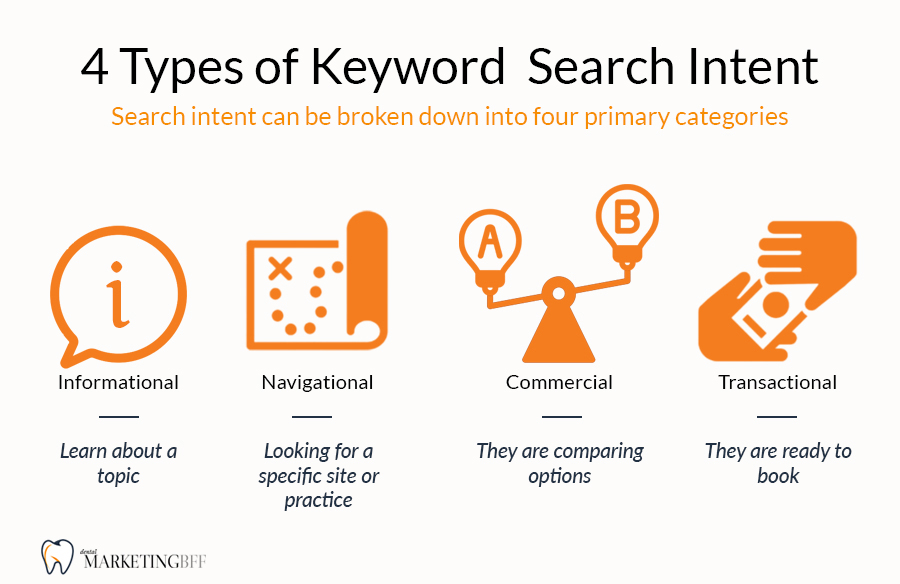
The 4 Types of Search Intent for Dental SEO
- Informational — Users want to learn something.
Example: “How often should kids go to the dentist?” - Navigational — They’re looking for a specific site or practice.
Example: “Sweet Tooth Pediatric Dentistry reviews.” - Commercial — They’re comparing options.
Example: “Best cosmetic dentist in Chandler.” - Transactional — They’re ready to book.
Example: “Schedule teeth whitening near me.”
By recognizing these, you can create content that meets users wherever they are in their decision process.
Matching content to the right intent starts with fundamentals — revisit On-Page SEO Basics for Dentists.
10 Ways to Optimize for Search Intent
If your dental website isn’t converting visitors into patients, chances are your content doesn’t match what people are actually searching for. That’s where search intent in dental seo comes in. By understanding why someone typed a phrase into Google — whether they’re researching, comparing, or ready to book — you can tailor your content to meet their needs and earn more clicks, calls, and appointments.
To choose the right phrases, follow our process in How to Do Keyword Research for Dental Services.
Here are 10 ways to optimize for search intent:
- Classify Every Keyword by Intent.
- Match Page Type to Intent. (Blogs = informational; service pages = transactional.)
- Include Clear CTAs on Transactional Pages.
- Answer Common Questions Directly.
- Use Schema Markup for FAQs.
- Add Reviews or Testimonials to Commercial Pages.
- Optimize Meta Descriptions for Click Intent.
- Study the Top 10 Google Results for Clues.
- Track Bounce Rate — Mismatched intent causes exits.
- Update Content to Reflect Current Search Behavior.
When your content aligns perfectly with search intent, Google rewards you with higher rankings — and patients reward you with trust.
Keep analyzing intent, adjusting your pages, and updating your CTAs to match what real searchers want. Do that consistently, and your website won’t just show up in search results — it’ll show up for the right people ready to take action.
FAQs
Conclusion: Align Your Content with What Patients Actually Want
When you understand search intent, you stop guessing — and start connecting. Every piece of content on your dental website should match what patients are truly looking for, whether they’re learning, comparing, or ready to book.
By aligning your keywords, pages, and calls-to-action with intent, you’ll satisfy both Google and your audience — leading to higher rankings, stronger engagement, and more appointments.
Ready to align your website with patient intent? Book a Free Dental SEO Strategy Call →
