
On-Page SEO Basics for Dental Practices
Think your dental website looks great but still not ranking on Google?
The problem might not be your content or your photos — it’s your on-page SEO.
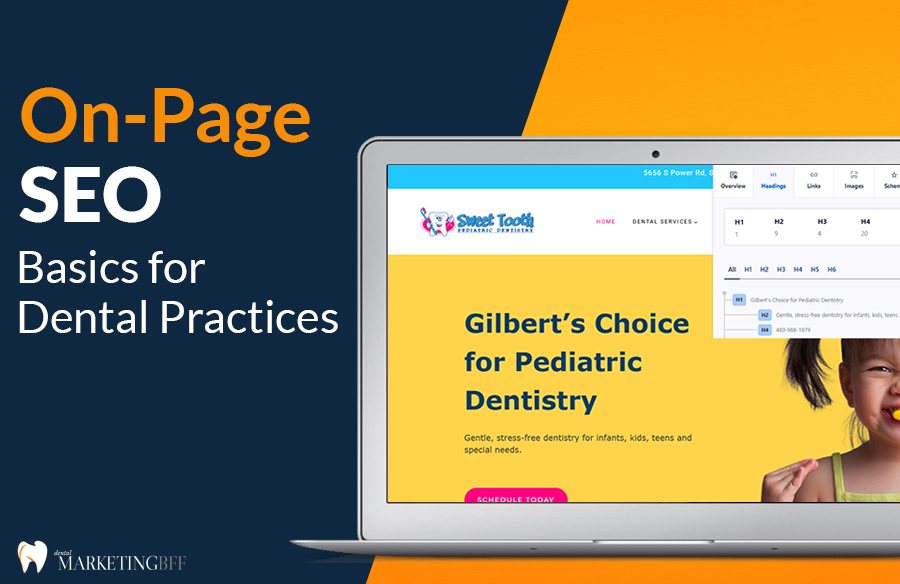
On-page SEO is how Google understands what your website is about and determines if it’s relevant to a patient’s search. Without it, your site is invisible — no matter how professional it looks.
Let’s break down what on-page SEO means for dental practices, why it matters, and the exact steps to optimize your site for more visibility and patients.
Key Takeaways
- On-page SEO helps Google understand your website’s content and intent.
- It includes optimizing titles, meta tags, headings, URLs, and internal links.
- Every dental service page should target a specific keyword and intent.
- Great on-page SEO increases visibility, clicks, and new patient calls.
- Small changes can make a huge difference in ranking performance.

See How Our Agency Can Help You Attract More Patients
- SEO — dominate Google and Local Map searches.
- Website Design — convert traffic into booked appointments.
- Content Marketing — we create content that gets traffic.
Why On-Page SEO Matters
When a potential patient searches “pediatric dentist near me,” Google scans millions of pages. The ones that match the searcher’s intent, include the right keywords, and provide a great user experience rise to the top.
Your dental website’s content, structure, and technical signals tell Google exactly what services you offer and which searches you should appear for.
Without proper on-page SEO, even great content won’t rank.
The Key Elements of On-Page SEO Basics for Dentists
Here’s what matters most for dental websites:
- Title Tags — Include your target keyword (e.g., “Family Dentist in Gilbert, AZ | [Practice Name]”).
- Meta Descriptions — Write persuasive summaries under 160 characters.
- Headings (H1–H3) — Use clear, keyword-rich headings that describe your content.
- Keyword Placement — Naturally include keywords throughout the copy (no stuffing).
- If you’re unsure how to find the right keywords, review our guide: How to Do Keyword Research for Dental Services.
- URL Structure — Keep URLs short and readable (/dental-seo/on-page-seo-basics/).
- Internal Links — Link to related topics to strengthen context and SEO.
- Image Optimization — Use descriptive filenames and alt text (“teeth-whitening-before-after.jpg”).
- Mobile Responsiveness — Ensure all pages are fast and functional on phones.
- Schema Markup — Add LocalBusiness and Dentist schema to help Google categorize your site.
- User Engagement — Optimize for time on page and clicks with CTAs and visuals.
10 Actionable On-Page SEO Tips for Dentists
Competing for the top spot on Google isn’t just about having a beautiful dental website — it’s about optimizing every page so search engines (and potential patients) instantly understand who you are, what you offer, and why you’re the best choice in town.
The good news? You don’t need to be an SEO expert to start seeing real results. Below are 10 actionable on-page SEO tips for dentists that you can implement today to improve your rankings, boost visibility, and drive more qualified patients to your practice.
- Use one H1 tag per page with your primary keyword.
- Write unique meta titles and descriptions for every page.
- Add internal links to 2–3 related pages within each blog post.
- Use bullet points and short paragraphs for readability.
- Place your target keyword in the first 100 words of each page.
- Add FAQs to service pages for long-tail keyword coverage.
- Include at least one optimized image with descriptive alt text.
- Use clear CTAs like “Book Appointment” or “Call Today.”
- Regularly update old content to stay fresh and relevant.
- Track keyword rankings monthly with Google Search Console.
Strong technical SEO supports good on-page SEO — follow the Technical SEO Checklist for Dentists.
Strong on-page SEO isn’t a one-time task — it’s an ongoing system that compounds over time.
By consistently optimizing your content, updating key pages, and monitoring your keywords, you’ll build a website that not only ranks higher but turns visitors into booked patients.
Start with the tips above, implement them across your site one step at a time, and watch your dental practice rise in the search results.
FAQs
Conclusion: Small Changes, Big Results in Dental SEO
Great design and content mean nothing if Google can’t understand your website. On-page SEO bridges that gap — helping patients find you instead of your competitors.
By refining titles, meta tags, structure, and user experience, your dental practice can turn simple website visits into booked appointments and loyal patients.
Ready to see how well your on-page SEO is performing? Book a Free Dental SEO Strategy Call →
