
How to Rank for “Near Me” Searches
Ever typed “dentist near me” and noticed your competitors pop up — but not your own practice?
You’re not alone. “Near me” searches have become the heartbeat of local SEO for dentists.
Over 80% of dental-related searches now include local intent. That means patients aren’t just looking for any dentist — they’re looking for the closest, best-reviewed, and most visible one.
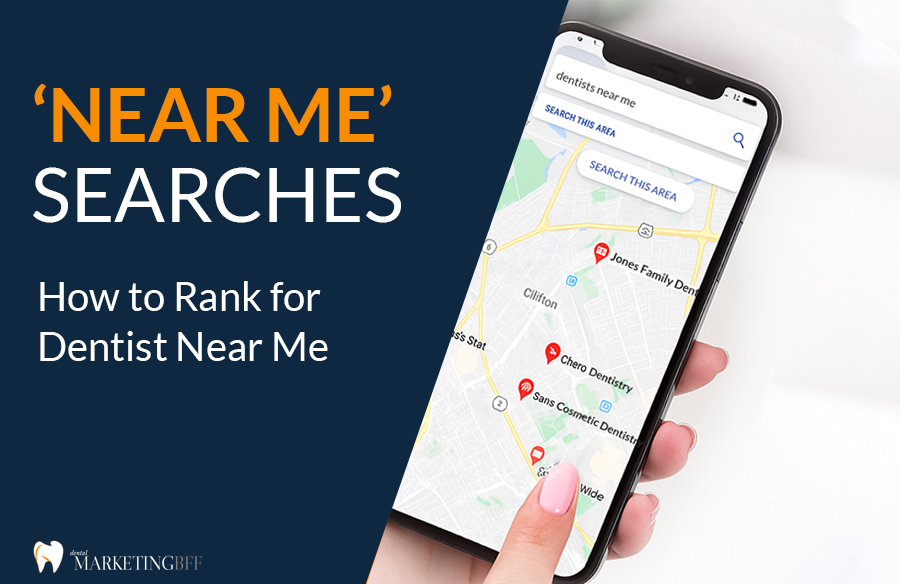
Ranking for “near me” searches requires more than just listing your city on your website. You need a complete ecosystem — Google Business optimization, reviews, NAP consistency, local schema, and hyper-local content.
Let’s break it down.
Key Takeaways
- “Near me” searches rely on proximity, relevance, and prominence.
- Your Google Business Profile (GBP) is the #1 driver of “near me” visibility.
- NAP consistency, reviews, and local content all influence results.
- Embedding a Google Map on your site can help signal local relevance.
- Engaging in your community increases real-world proximity signals.

See How Our Agency Can Help You Attract More Patients
- SEO — dominate Google and Local Map searches.
- Website Design — convert traffic into booked appointments.
- Content Marketing — create a local content strategy that gets traffic.
Why “Near Me” Searches Are Game-Changers for Dentists
When someone types “dentist near me”, Google automatically pulls their location and shows practices within a few miles that have strong local signals.
That’s why even the most beautiful website won’t rank if Google doesn’t see your practice as relevant or nearby.
According to a 2025 BrightLocal report:
- 84% of consumers use Google Maps to find local businesses.
- 88% of local searches on mobile result in a call or visit within 24 hours.
- Businesses that appear in the Map Pack get 70% of clicks on the first page.
If you’re not showing up in those top 3 spots, you’re missing out on dozens of new patients every month.
How “Near Me” Searches Actually Work
Google’s algorithm considers three key signals when ranking local results:
1. Proximity
How close your dental office is to the searcher’s location.
2. Relevance
How well your Google Business Profile and website match the search intent (“pediatric dentist,” “teeth whitening,” etc.).
3. Prominence
How established your business appears based on reviews, backlinks, and citations.
These signals combine in real time — meaning even a great website can lose visibility if your NAP info is inconsistent or you lack recent reviews.
How to Optimize Your Dental Practice for “Near Me” Searches
Here’s a step-by-step system used by top-ranking dentists in every major city.
1. Fully Optimize Your Google Business Profile
Your GBP (formerly Google My Business) is your most important local asset.
Make sure to:
- Use your official business name (no keyword stuffing)
- Add accurate hours, phone number, and address
- Upload high-quality photos of your office and team
- Choose primary and secondary categories carefully
- Post weekly updates or special offers
2. Optimize Your Website for Local Keywords
Include your city name and neighborhood throughout your homepage, service pages, and meta tags.
Example:
“Your Trusted Family Dentist in Denver, CO — Gentle, Comprehensive Care for Every Smile.”
Make sure your NAP matches your GBP exactly, and embed a Google Map on your contact page.
“Near me” searches behave differently than simple city searches — learn the difference in Geo-Targeted Keywords: How to Win in Your City.
3. Get and Respond to Google Reviews
Google uses reviews as trust signals.
More reviews = more prominence = higher ranking.
Encourage patients to mention your city in their reviews naturally:
“We love coming here — the best pediatric dentist in Denver!”
Always reply to reviews, even the negative ones. It shows engagement.
4. Use Local Schema Markup
Add LocalBusiness and Dentist schema to your homepage to give Google structured data about your practice. Include your exact address, coordinates, phone number, and hours.
5. Build Local Backlinks
Earn mentions and backlinks from local news outlets, community sites, and chambers of commerce. Each one strengthens your local prominence and trustworthiness.
6. Create Local Content
Write blog posts and pages about:
- Community events you sponsor
- Nearby landmarks or schools
- Seasonal local promotions
Example:
“Back-to-School Dental Cleanings in Denver: Why August Appointments Fill Fast”
Local content signals to Google that your practice is active in the community — which helps trigger “near me” visibility.
To capture those local queries, make sure each service area has a page built like this guide: How to Create Location Pages That Actually Rank.
7. Improve Proximity Signals Offline
“Near me” results aren’t purely digital. Google factors in real-world data like foot traffic, Wi-Fi signals, and mobile engagement.
Participating in local events, sponsoring sports teams, or getting listed in community business directories strengthens these signals.
Advanced Tips to Outrank Competitors
- Add geo-tagged images to your GBP using your smartphone’s location data.
- Publish local Q&As in your Google Posts.
- Include FAQ schema on your homepage for quick-answer visibility.
- Audit your NAP monthly using BrightLocal or Whitespark.
- Build “city + service” pages (e.g., “Invisalign in Denver” and “Invisalign in Aurora”).
Common “Near Me” Ranking Mistakes
- Using a P.O. box or virtual office (Google wants physical locations).
- Not verifying your GBP listing.
- Ignoring duplicate or incorrect citations.
- Overusing “near me” in titles or content.
- Failing to respond to new reviews.
Fixing these errors often leads to immediate ranking gains within weeks.
FAQs
Conclusion: Be the Dentist Patients Find When It Matters Most
Ranking for “near me” searches isn’t about guessing — it’s about proving to Google that your practice is the most relevant, trusted, and visible option nearby. When your Google Business Profile, website, reviews, and schema all work together, your clinic becomes the clear answer for local patients searching right now.
By optimizing every local signal — online and offline — you’ll turn everyday searches into steady new appointments and long-term growth.
Ready to make your practice the first name patients see in “near me” results? Book a Free Dental SEO Strategy Call →
